
My research group focuses on combining experimental petrology with non-traditional stable isotope geochemistry and natural sample studies to understand geological processes on Earth and other planets during their formation, differentiation, and evolution.

(high-temperature furnace and piston cylinder)
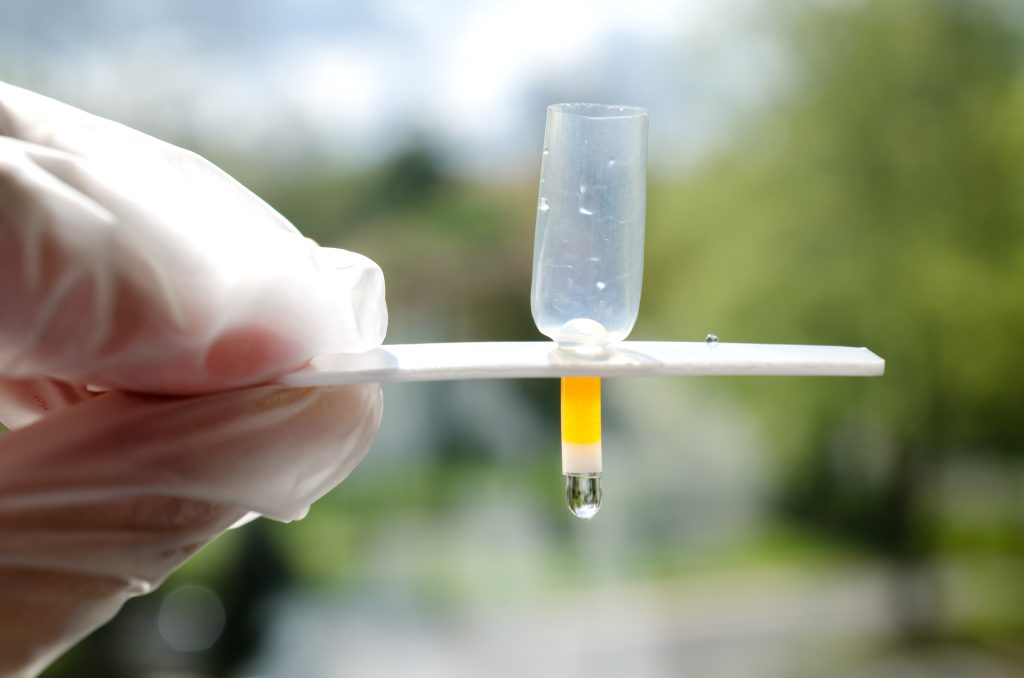
(column chemistry and MC-ICP-MS)

(orange glass beads; Lunar Sample Compendium)
Recent research projects:
Fate of fire fountain eruption products on the Moon
On the surface of the Moon, basaltic volcanism occurred mainly in two forms: 1) mare basalts that fill impact basins, forming dark regions that contrast the brighter highlands, and 2) fire fountain eruptions that produce pyroclastic deposits. These deposits are even darker than mare basalts, but they contain beautiful glass spherules that range in color from green to yellow, orange, and rose as a function titanium content. (Check out images on Apollo 15 green glasses and Apollo 17 orange glasses from Virtual Microscope).
These pyroclastic deposits have drawn attention from the scientific community since their first return by the Apollo missions. Early studies reported surface coatings of sulfides and chlorides, supporting their volatile-rich nature. Since 2008, water in the form of hydroxyl has been detected in these volcanic products, offering new insights on volatile abundances of the lunar mantle.
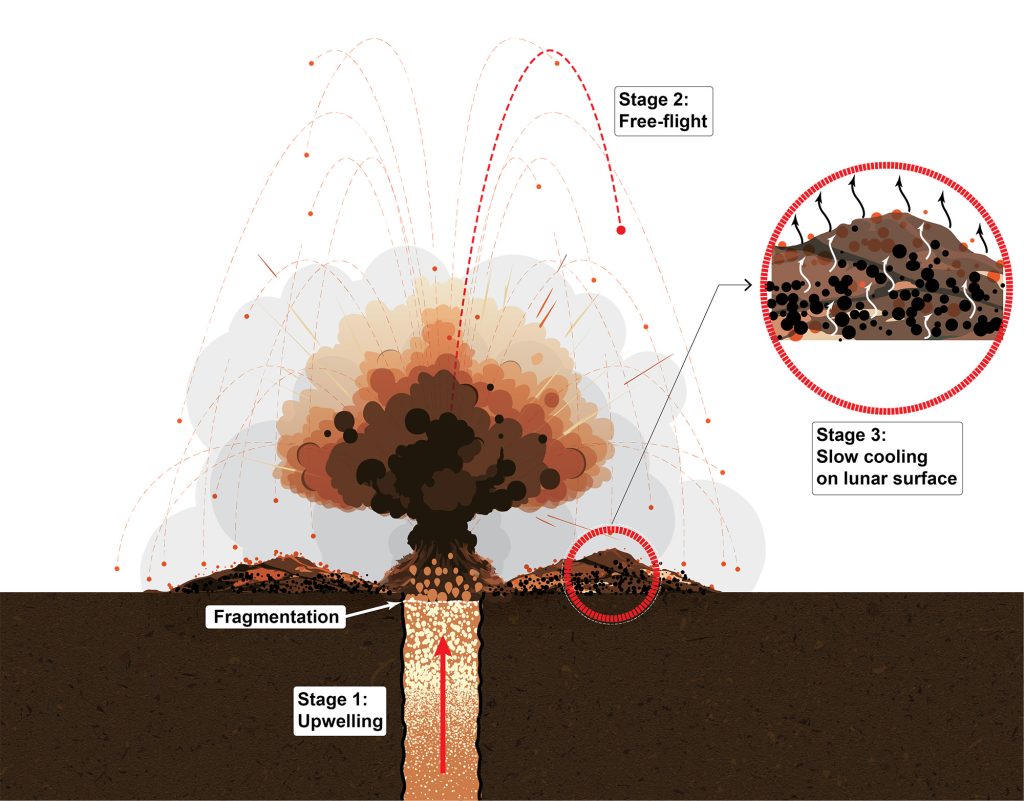
In a recent research project, we modeled the degassing history of Apollo 17 volcanic samples and found evidence for three stages of degassing: (1) decompression-driven degassing during magma ascent, (2) open-system degassing during ballistic flight, and (3) continued volatile loss during slow cooling after the deposits accumulate on the lunar surface (see illustration on the right). This interpretation—particularly the third stage involving slow cooling and continued degassing—is supported by thermal modeling and is consistent with multiple sample observations, including devitrification of glass beads, surface coatings of sulfides and chlorides, and enrichment in zinc and copper along with their lighter isotopes.
This result further implies that lunar pyroclastic deposits may continue to release volatiles into their surroundings, potentially sustaining a transient local atmosphere well after volcanic activity has ended.

Understanding planetesimal core crystallization using Fe isotopes
Human interaction with iron meteorites can be tracked back to thousands of years ago, when iron meteorites were still mined by ancient people as a source for iron, before the development of smelting. It was not until about two hundred years ago, however, before we began to realize that iron meteorites are actually fragments of the cores of extinct asteroids in the early Solar System. Recent scientific studies on iron meteorites found a very interesting but puzzling observation: the Fe isotopic compositions of iron meteorites are significantly heavier compared to the building blocks of their parent bodies – chondrites. Our research shows that the heavy Fe isotopes of iron meteorites are actually due to core crystallization. In addition, our results show that the planetesimal cores have sulfur-rich parts that is also enriched in the lighter isotopes of Fe, but missing in meteorite records.
Fe and Mg isotopes of mineral inclusions in deep diamonds
Although most diamonds originate at ~150–200 km depth in the mantle, a small subset contains high-pressure mineral inclusions (often retrogressed) that indicate formation at ~300–700 km depth. These “sublithospheric” diamonds are among the deepest Earth materials naturally transported to the surface.
One branch of my research focuses on analyzing the Fe and Mg isotopic compositions of tiny mineral inclusions encapsulated in these deep diamonds. In nature, the isotopic ratios 56Fe/54Fe and 26Mg/24Mg can vary slightly because isotopes of the same element behave slightly differently during chemical and physical processes. By measuring these variations, we can potentially constrain the sources of Fe and Mg in the inclusions and the processes they have experienced.
(Image on the right shows CLIPPIR diamonds ranging from 14 to 90 carats; image by Robert Weldon/GIA)


When we measured Fe isotope compositions in metallic inclusions from a group of, so-called “CLIPPIR diamonds”, we found that these inclusions contain Fe with 56Fe/54Fe ratios higher than those observed in any mantle-derived rocks. Such elevated 56Fe/54Fe ratios cannot be produced by documented mantle processes. Instead, they suggest that the iron in these inclusions was sourced from Earth’s surface, where low temperatures allow for larger iron isotope fractionation. Subduction then transported this surface-derived material into the mantle transition zone, where deep diamonds formed during melting and remobilization. Small drops of the metallic liquid got encapsulated in the growing diamonds and eventually returned to the surface.
This finding points to a long-term mantle geodynamic pathway–potentially operating over billions of years–that plays an important role in recycling water, halogens, and other volatiles from Earth’s surface into its deep interior. (See publications, Smith and Ni et al., 2021, Science Advances)
Image on the left shows metallic inclusions in a CLIPPIR diamond. The body of the “bird” is an example of such inclusions; image by Evan Smith/GIA.
In a more recent project, we targeted ferropericlase (Mg,Fe)O inclusions in sublithospheric diamonds for Fe and Mg isotope analyses. This is the most abundant type of mineral inclusion found in sublithospheric diamonds, yet its formation mechanism remains elusive.
Our measured Fe and Mg isotope compositions of these ferropericlase inclusions from Juina, Brazil and Kankan, Guinea showed that they fall into two groups. One group has mantle-like compositions and was likely directly captured from mantle rocks. The other group with varying Fe, Mg contents and isotopic compositions, on the other hand, is more consistent with them directly crystallizing from the diamond-forming liquid. The observation helps explain the origin of ferropericlase inclusions in sublithospheric diamonds and speaks to the onset of slab melting that led to the formation of diamonds inside the subducted slab. (see publications, Ni et al. 2025, Science Advances)
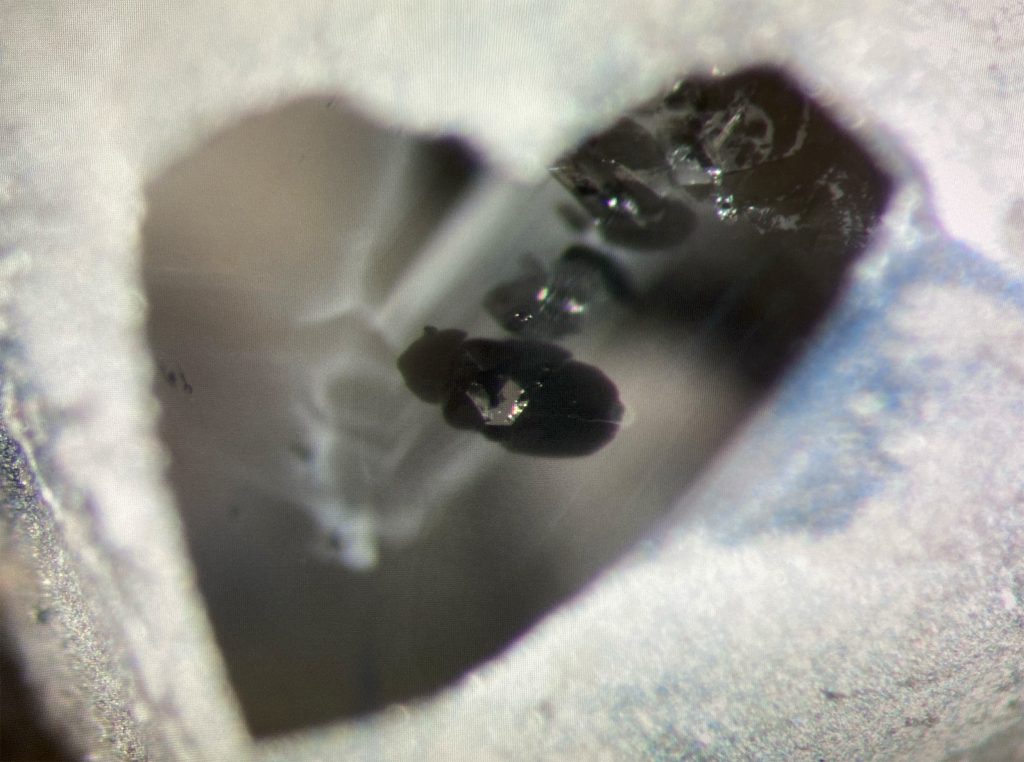
Image on the right shows ferropericlase (Fe,Mg)O inclusions lining up through a heart-shaped window polished on a Brazilian diamond; image by Peng Ni.
Cu evaporation during tektite formation
Tektites are felsic natural glasses that formed from fast cooling of the molten portion of the impact plume. As one of the few types of natural samples that experienced significant evaporative loss at high temperatures (> 1700 ºC), tektites provide us an opportunity to understand how volatile elements (e.g. Cu, Zn) and their isotopes behave during thermally-driven evaporation. Although expected to be less volatile than Zn, Cu demonstrates higher degrees of evaporative loss and isotopic fractionation compared to Zn in tektites. In this project, we conducted laser-heated aerodynamic levitation experiments to simulate tektite formation, and studied Cu isotopes in the evaporative residue to understand why tektites are more isotopically fractionated in Cu than Zn.
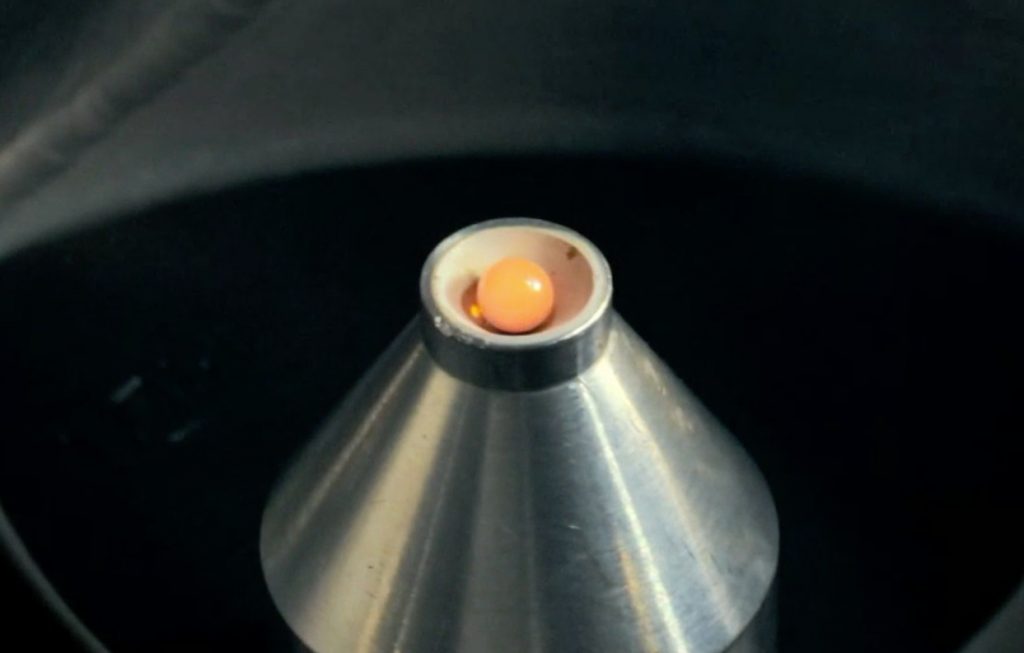
(Image on the right shows a laser levitation experiment in action.)
Copper diffusion in silicate melts
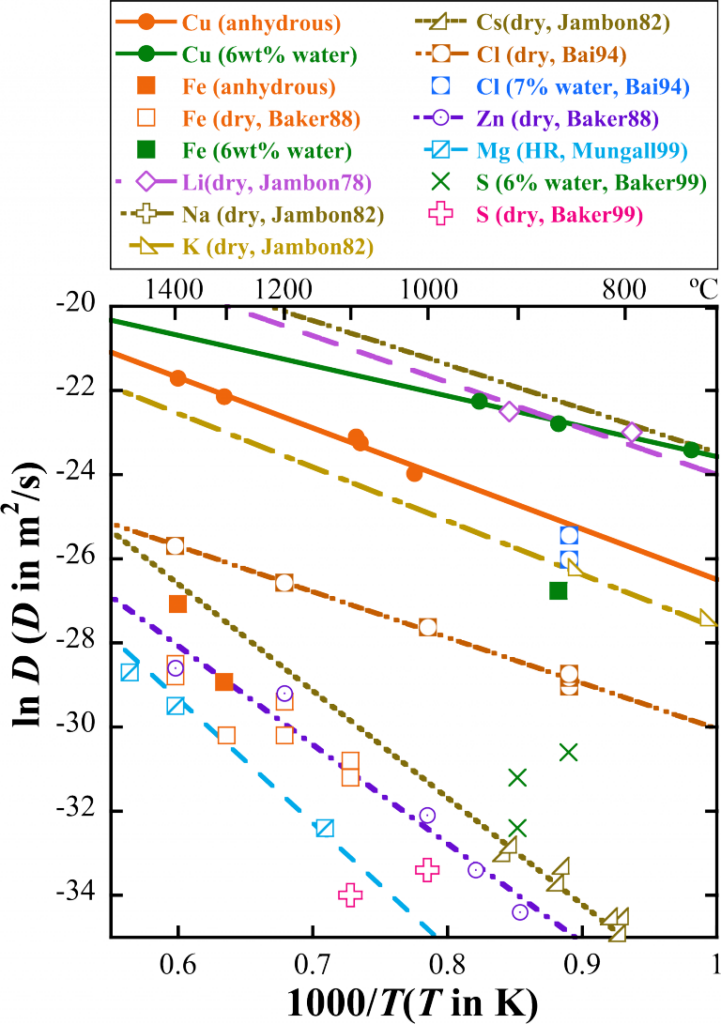
As a chalcophile and moderately volatile element, diffusion of Cu in silicate melts is interesting because of its potential role in controlling the enrichment of Cu in ore deposits and isotope fractionation in tektites. By conducting a series of experiments, I systematically constrained the effects of temperature, pressure, and melt composition on Cu diffusion in silicate melts.
Copper diffusivity was found to be one of the highest among all cations in silicate melts. The high diffusivity of Cu indicates that kinetic control is unlikely a factor to limit Cu enrichment during ore generation processes, and provides an opportunity for Cu to be fractionated from slow-diffusion metals in related ore deposits. Because of its high diffusivity, the more fractionated Cu isotopes in tektites than Zn can also be explained by a higher diffusivity of Cu than Zn leading to a higher degree of evaporation loss. In general, my study constrains Cu diffusion rates in silicate melts under a wide range of natural conditions, which allows quantitative understanding and modeling of various kinetic processes in terrestrial and planetary systems, such as ore generation, fluid-melt interaction, and evaporation.
(Right figure shows Cu diffusivity in basaltic melt from Ni et al., 2017)
Volatile budget of the lunar mantle
Advancement on our understanding of the Moon formation is probably the most important scientific contribution by the Apollo mission. It is now widely accepted that the Moon formed through an energetic collision between a large planetary body and the proto-earth. Because of its formation by a giant impact, the Moon was long thought to be dry . Recent studies, however, reported intrinsic H2O in various types of lunar samples, which brings new challenges to the conventional giant impact model for Moon formation.
During PhD, the PI had opportunites to work on these rare samples returned by the Apollo mission. By studying melt inclusions hosted in lunar olivine grains, he estimated the volatile depletion trend in the lunar mantle, which shows low degrees of depletion for elements more volatile than Rb and Cs. This lack of depletion in lunar volatiles calls for further improvements on the Moon formation model to reconcile the volatile budgets on the Moon, which are critical for understanding the origin and evolution of the Earth-Moon system.
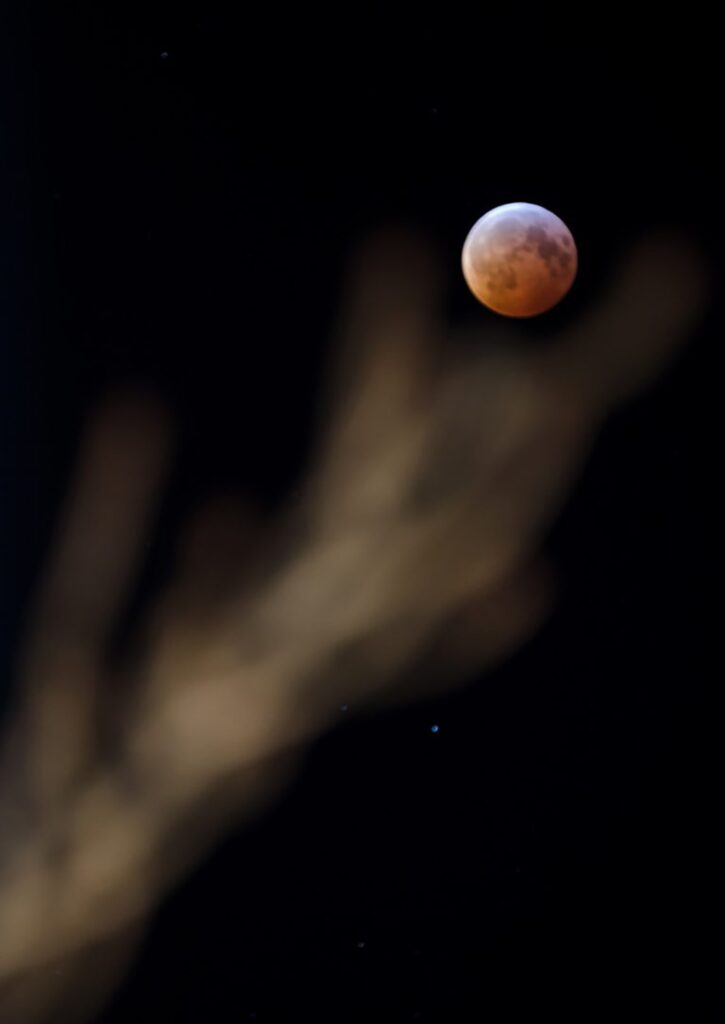
(photo on the left: blood Moon in 2019)